
“Breakout Equilibrium” is a trading system built around one of the market’s most reliable phenomena: price reaction following an exit from a prolonged phase of sideways movement. Unlike classic strategies focused on trend continuation, this approach targets the precise moment when market balance is disrupted—when, after extended indecision, the market finally commits to a direction.
It is at this exact moment that the probability of a strong and sustained move over the next 15–40 minutes peaks—making it ideal for binary options trading on the CloseOption platform.
Core Concept and Logic
Markets spend most of their time in a state of uncertainty, with price oscillating within a narrow range, forming what’s known as a trading channel. Buyers and sellers hold each other in equilibrium until an external catalyst—such as news, volume shifts, or a session change—breaks the stalemate.
Crucially, a mere price breach of the channel boundary is not yet a valid signal. Often, price briefly spikes beyond the range only to snap back immediately, triggering false breakouts.
A genuine signal occurs only when the breakout is confirmed by internal structure—meaning price not only exits the range but remains outside, with the subsequent candle closing firmly in the new zone.
“Breakout Equilibrium” focuses precisely on this confirmation. It doesn’t attempt to predict direction in advance; instead, it waits for the market to reveal its intent—and only then enters the trade.
Preparation and Market Conditions
The strategy works well with most liquid assets: major forex pairs like EUR/USD and GBP/USD, as well as cryptocurrencies such as BTC/USD—preferably during periods of stable trading activity (avoid weekends and holidays). The primary chart timeframe is M5, while M15 is used for broader context.
First, identify the current trading range on the M15 chart—a zone where price has moved consistently over the past 2–3 hours, with clearly defined upper and lower boundaries. These boundaries should be marked with horizontal lines drawn at levels of repeated tests, not isolated spikes. The longer the consolidation, the stronger the potential move following the breakout.
Signal Formation and Confirmation
A valid entry signal unfolds in three stages:
- Breakout: Price must close outside the established range on the M5 chart, preferably on increased volume.
- Holding: The next candle must not retreat back into the range; its entire body should remain beyond the boundary.
- Momentum Confirmation: This second candle should show acceleration—either a longer body compared to the prior candle or short wicks, indicating clear dominance by buyers or sellers.
When all three conditions are met, place a trade in the breakout direction:
- CALL if the breakout is upward.
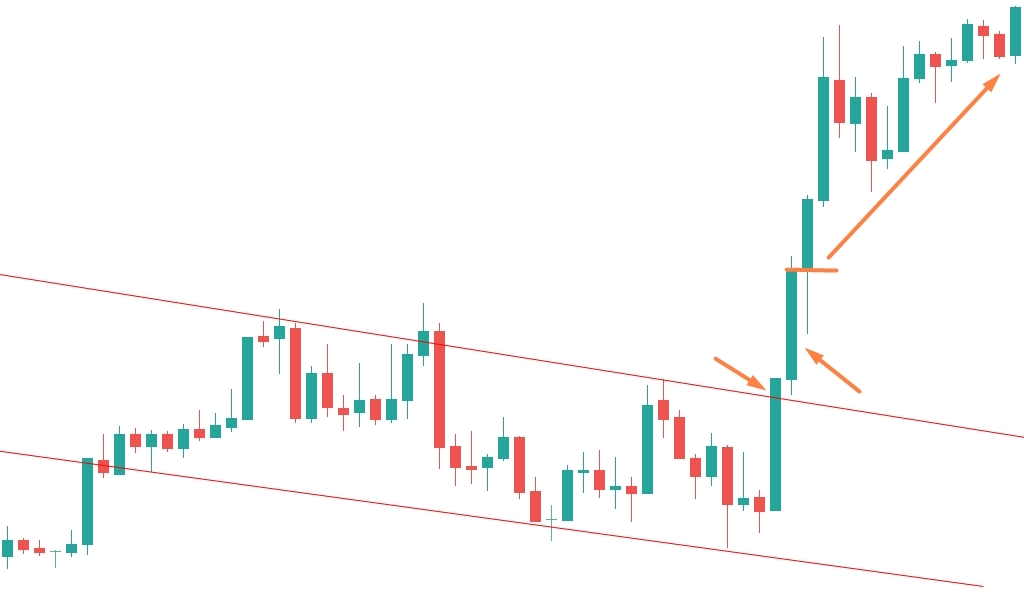
- PUT if the breakout is downward.
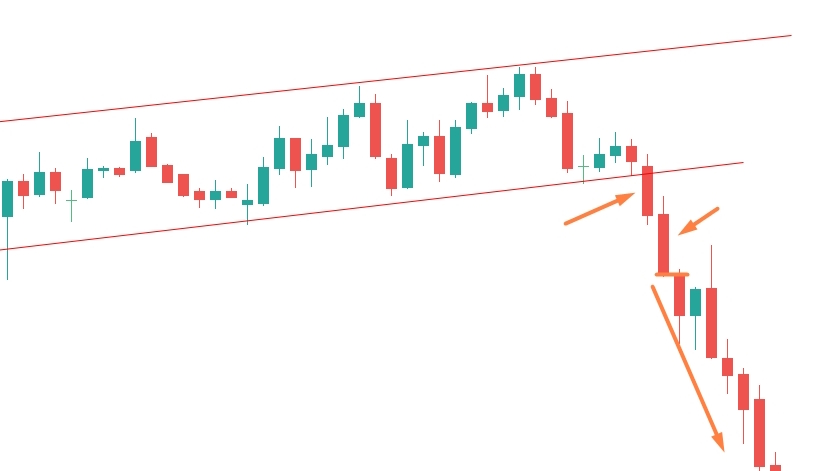
Expiry should be set between 20–35 minutes (equivalent to 4–7 M5 candles). This typically allows enough time for the market to cover 1.5–2 times the width of the former range—a common post-consolidation target.
The strategy demands strict signal filtering. For instance, avoid trading breakouts occurring within 15 minutes of major macroeconomic data releases, as price action may be erratic and quickly reversed. Similarly, skip setups where the range is too narrow (e.g., less than 10 pips for EUR/USD), as such breakouts often represent market noise rather than genuine momentum.
“Breakout Equilibrium” is a method for patient traders. It doesn’t require constant screen monitoring or chasing every minor move. Its power lies in waiting—in recognizing the precise moment when the market finally makes a decision, and in trusting that after prolonged stillness, it won’t take just one step, but several.
On the CloseOption platform, this system performs with exceptional consistency, thanks to clean chart visualization, fast execution, and flexible expiry management. Most importantly, it reminds us: sometimes the most profitable move isn’t pressing a button—it’s waiting for the market to press it for you.